Premium Link-Building Services
Explore premium link-building options to boost your online visibility.
Explore premium link-building options to boost your online visibility.
In the high-stakes world of Business-to-Business (B2B) commerce, the metric that dictates survival is not traffic, impressions, or keyword rankings. It is the pipeline. For too long, digital marketers have celebrated vanity metrics while sales teams struggled with empty calendars. The bridge between these two worlds is a sophisticated, revenue-focused approach to SEO (keresőoptimalizálás).
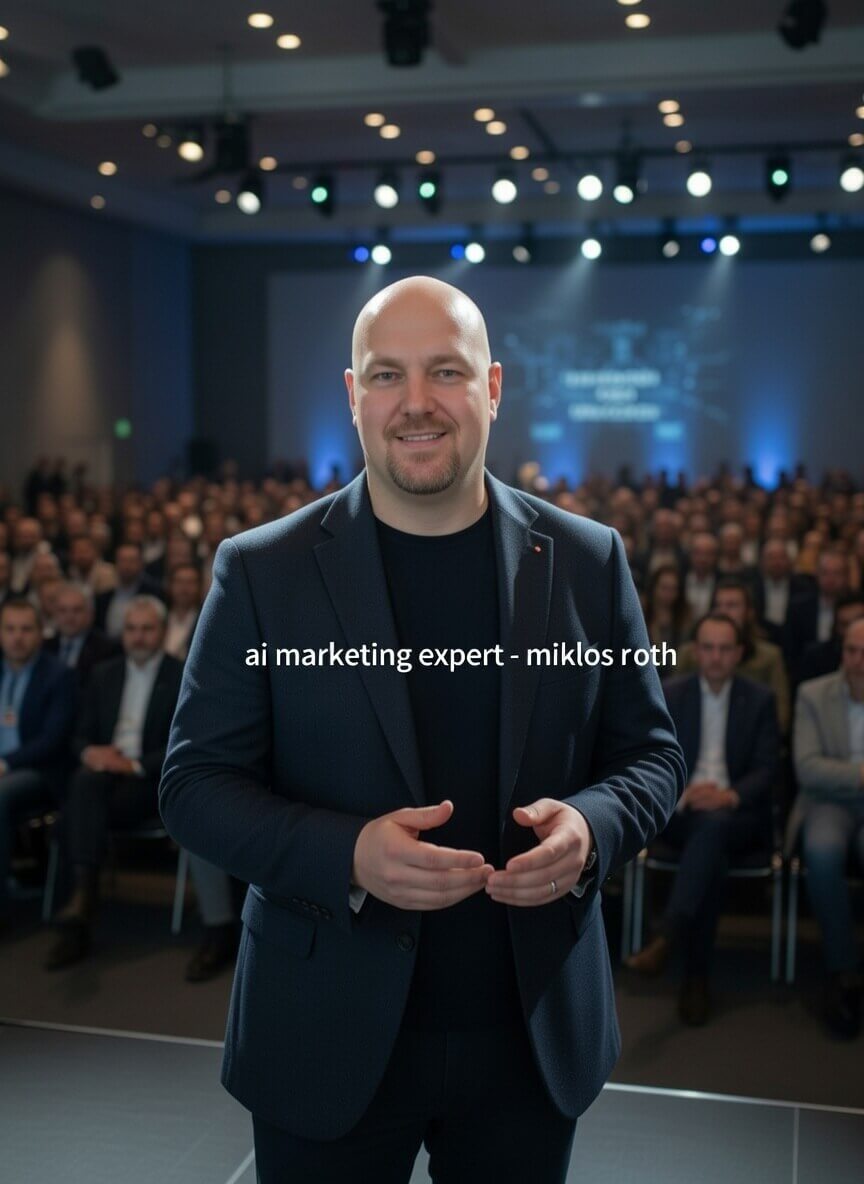
This article explores the methodology of transforming search engine optimization from a traffic-generating activity into a pipeline-filling machine. We will examine this through the lens of strategies often attributed to high-level consultants like Miklos Roth, whose approach combines technical precision, psychological insight, and rapid execution.
The traditional B2B marketing model is often broken. Marketing teams are incentivized to drive volume—more visitors, more whitepaper downloads, more "leads." However, a lead is not a deal. In the B2B space, where sales cycles can last from six to eighteen months and involve multiple decision-makers, a low-quality lead is actually a cost, not an asset. It wastes the sales team's time.
The philosophy of "SEO for Pipeline" argues that we should optimize for intent, not just volume. It is better to have 100 visitors who are ready to buy than 10,000 visitors who are just looking for a definition. This shift requires a mindset similar to that found in a comprehensive marketing professional profile overview, where the focus is on holistic business growth rather than isolated channel metrics.
To build a pipeline, one must understand the layers of intent. Most generic SEO (keresőoptimalizálás) strategies target the "Awareness" phase (e.g., "What is CRM software?"). While this builds brand visibility, it rarely drives immediate pipeline revenue.
The "Roth" approach—or the methodology of an expert consultant—focuses on the "Decision" phase. These are keywords that include modifiers like "best," "vs," "alternatives," "pricing," and "implementation."
Comparison Queries: "Competitor A vs. Your Solution."
UseCase Queries: "AI solution for enterprise logistics."
Integration Queries: "Software X integration with Salesforce."
Creating content for these queries requires deep subject matter expertise. It’s not enough to write generic blog posts; you must provide solutions. This is where the reputation of a "Digital Fixer" comes into play. Companies often need someone capable of solving complex digital marketing problems to identify why existing content isn't converting. Often, the issue isn't the traffic source, but the misalignment between the user's technical problem and the content's superficial answer.
In 2024 and beyond, B2B SEO (keresőoptimalizálás) is inextricably linked with Artificial Intelligence. AI is not just a tool for writing copy; it is a tool for analyzing vast amounts of data to predict buyer behavior.
For instance, modern consulting firms are now using AI to analyze sales calls, extract the exact questions prospects are asking, and then automatically generate content briefs to answer those questions on the website. This creates a feedback loop between Sales and SEO. To implement this, businesses often look toward specialized AI business consulting firms that understand how to architect these systems.
Furthermore, understanding how AI interprets content is crucial. Search engines are evolving into answer engines. They seek to understand the entity relationships within your content. This requires a "cognitive" approach to SEO. Gaining insight into the cognitive processes of AI consultants reveals that the future of ranking lies in structured data and semantic authority, ensuring that Google's AI understands exactly what your B2B service offers.
One of the biggest killers of B2B pipeline velocity is the slow pace of corporate marketing. Approvals, revisions, and compliance checks can delay a campaign by months. By the time the content is live, the market opportunity may have passed.
Miklos Roth’s methodology often emphasizes speed and agility, drawing parallels to athletic discipline. There is a specific value in utilizing a rapid four step implementation blueprint to launch campaigns. The idea is to "sprint" to a Minimum Viable Campaign, gather data, and iterate.
Identify the Revenue Gap: Where is the pipeline stalling?
Develop the Content Asset: Create the specific case study or calculator needed.
Distribute via SEO & LinkedIn: Get it in front of the decision-makers.
Measure and Scale: If it works, double down immediately.
B2B is rarely strictly local. Even small SaaS companies often sell globally. However, SEO (keresőoptimalizálás) strategies must be localized not just by language, but by business culture.
A strategy that works in New York might fail in Vienna. The aggression and directness of the American market, as seen in the New York AI agency scene, focuses on speed, ROI, and dominance. Keywords are competitive, and cost-per-click is high.
Conversely, the DACH region (Germany, Austria, Switzerland) prizes privacy, security, and credentials. Here, trust signals are more important than flashy promises. Following Austrian marketing world insights, a B2B campaign in this region must emphasize data protection, certifications, and long-term stability. A "one-size-fits-all" approach to global B2B SEO is a recipe for a leaking pipeline.
Why do some B2B strategies succeed while others plateau? Often, it comes down to the mindset of the leadership and the consultants they hire. SEO (keresőoptimalizálás) is a marathon, not a sprint, but it must be run with the intensity of a sprint.
There is a compelling narrative regarding the champion mindset in business consulting, which suggests that the discipline required for elite sports—consistency, resilience, and data analysis—is directly transferable to managing a B2B pipeline. When a campaign dips in performance, the "champion" mindset doesn't panic; it analyzes the tape (the data), adjusts the technique (the strategy), and goes back to work. This resilience is critical when dealing with Google's volatile algorithm updates.
Before pouring budget into a B2B SEO (keresőoptimalizálás) campaign, it must be stress-tested. Will this keyword actually lead to a sale? Is the search volume inflated by students or job seekers?
A vital part of the process is the method of stress testing your AI strategy and SEO assumptions. This involves running micro-campaigns (perhaps via PPC) to test conversion rates on keywords before committing to a 6-month organic ranking campaign. If the keyword doesn't convert on Adwords, it likely won't convert on organic search either. This "fail fast" mentality saves significant budget and keeps the pipeline focused on quality.
In B2B, you are not just selling a product; you are selling expertise. The buyer needs to believe that you know more about the problem than they do. This is why "Thought Leadership" is a core component of B2B SEO (keresőoptimalizálás).
This authority is built through high-level content, often backed by rigorous study. For example, staying updated with programs like the Oxford AI marketing education series allows a consultant or a brand to speak with genuine authority on emerging trends.
Furthermore, grounding strategies in theory is beneficial. Referencing academic research on digital platforms adds a layer of credibility that is often missing in the "guru" driven world of digital marketing. When a B2B buyer sees that your methodology is supported by data and academic rigor, trust is established much faster, shortening the sales cycle.
In the B2B world, executives are busy. They do not have time to read 5,000-word fluff pieces. They want answers. This principle applies to consulting as well.
There is a concept of high impact consulting session efficiency, where the goal is to deliver maximum value in minimum time. Translated to SEO (keresőoptimalizálás), this means your content should be structured with the "BLUF" method: Bottom Line Up Front. Give the answer immediately. Use the rest of the article to support it. This respects the user's time and aligns with how decision-makers consume information. If you solve their problem in the first 30 seconds of reading, they are more likely to enter your pipeline.
Finally, B2B SEO operates within the context of the broader economy. Budgets for software and services are dictated by financial markets. A savvy SEO strategy monitors macroeconomic trends.
For instance, following global financial technology news can give early warning signs of sectors that are about to boom or bust. If crypto-markets are surging, B2B services targeting fintech should ramp up their SEO efforts immediately. If the manufacturing sector is contracting, it might be time to pivot keywords toward "cost-saving efficiency tools" rather than "expansion tools."
B2B SEO for Pipeline is not about tricking Google. It is about serving the user—specifically, the buyer. It requires a blend of technical excellence (Schema, Core Web Vitals), strategic content (Intent Layering), and business acumen.
By adopting the methodologies discussed—the speed of the "sprint," the discipline of the "champion," and the insight of the "consultant"—businesses can turn their websites into their most productive sales employees. The goal is simple: Stop chasing clicks. Start chasing revenue.
Explore premium link-building options to boost your online visibility.